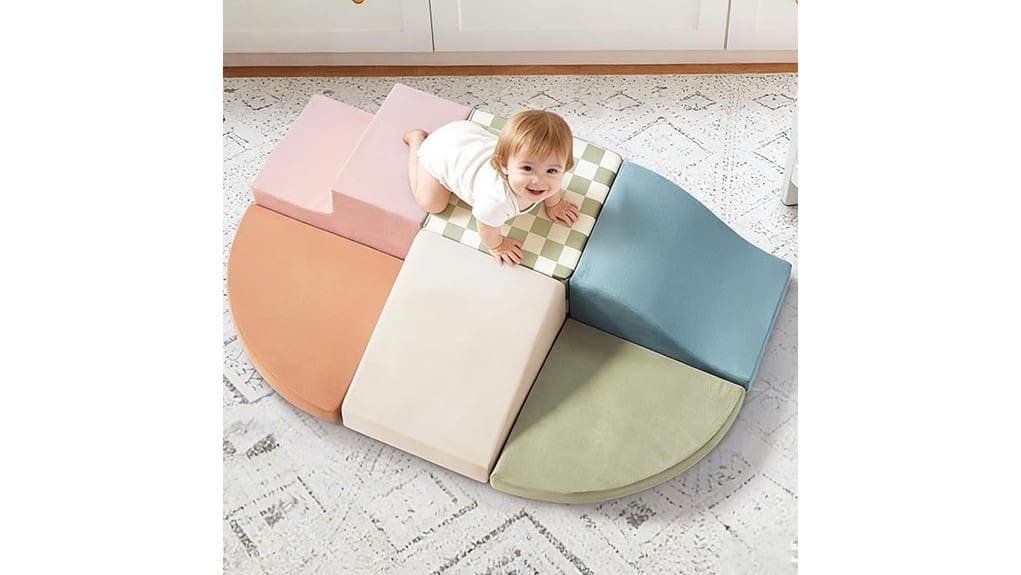

You’ll find Tiny Land’s soft foam climbing blocks a safe, modular choice for toddlers, with a gentle 16.7° slope, hidden zippers, anti‑slip bottoms, and strong Velcro to reduce tipping and pinches. The high‑density foam keeps shape through frequent use and covers are removable and machine‑washable. Pieces pack compactly for small homes and support balance, core strength, and cooperative play. If you want practical durability plus developmental value, keep going to see setup, care, and comparisons.
Some Key Takeaways
- Gentle 16.7° slopes and high-density foam provide safe, stable climbs for toddlers while reducing tipping and slipping risks.
- Six modular pieces (cubes, ramps, wedges, waves) enable varied layouts for tummy time, beginner climbs, tunnels, and gentle slides.
- Strong Velcro, thick base pads, and anti-slip bottoms keep configurations secure during active play.
- Removable, breathable covers are machine-washable; spot-clean spills and inspect Velcro and seams weekly for longevity.
- Mid-to-upper price-tier product balances durable, shape-retaining foam and thoughtful design compared to cheaper rivals.
Quick Verdict: Should You Buy Tiny Land Soft Foam Climbing Blocks?
If you want a safe, versatile soft-play set that grows with your toddler, Tiny Land Soft Foam Climbing Blocks are worth considering: they combine a scientifically designed gentle slope, sturdy construction, and washable, skin‑friendly covers to support climbing, sliding, and motor-skill development while fitting neatly into a modern home. You’ll appreciate modularity, stable bases, and breathable, machine-washable covers that simplify upkeep. Evaluate color options to match your décor; Morandi and vintage tones keep spaces calm. Considering durability and developmental benefits, the price range is reasonable for a long-lasting, multifunctional toy that encourages independent play and physical growth. These features also make them a practical choice for homeowners looking to create a kid-friendly playset deck that lasts.
How Safe and Durable Are the Climbing Blocks for Toddlers?
Because Tiny Land blends thoughtful engineering with quality materials, you can feel confident letting toddlers climb, crawl, and slide on these blocks. The design uses a 16.7° gentle slope, thick base pads, strong Velcro, anti-slip bottoms, and hidden zippers to reduce tip, slip, and pinch hazards. Durability testing shows the high-density, high-resilience foam core keeps its shape and support after repeated use; the removable fabric cover withstands machine washing without degrading. A clear materials breakdown—foam density, cover textile, and hardware—helps you assess longevity and safety. Overall, construction and maintenance meet practical family needs. For homeowners wanting to further childproof outdoor play areas, consider adding playset safety handles to provide extra stability and confidence around larger play structures.
Play Performance: Modular Layouts, Developmental Benefits, and Real-World Use
When you arrange Tiny Land’s six modular pieces—cubes, ramps, wedges, and waves—you get versatile layouts that grow with your child’s skills, from tummy-time tunnels to gentle slides and beginner climbs. You’ll find modular storytelling easy: each configuration suggests scenes that boost imaginative play while guiding physical progression. The 16.7° ramp, stable bases, and Velcro keep challenges safe as kids develop balance, core strength, and spatial reasoning. Parents report obstacle creativity sparks cooperative play and problem-solving during setup. Real-world use shows durable foam holds shape through repeated climbs, and compact storage means you’ll rotate layouts without sacrificing living space. These pieces pair well with outdoor play elements like balance beams to extend motor-skill development and safe play areas.
Cleaning, Maintenance, and Setup Tips for Everyday Families
Regularly wiping the covers and checking seams will keep Tiny Land’s foam pieces hygienic and looking new. You’ll remove crumbs and surface dirt with a damp cloth and mild detergent, then air-dry thoroughly. For deeper cleans, unzip and use machine washing on a gentle cycle; avoid bleach and high heat to protect fabric and hidden zippers. Treat spills immediately with spot cleaning to prevent staining. Inspect Velcro, anti-slip bottoms, and foam integrity weekly; tighten connections and replace covers if seams fray. Store dry in a ventilated area, rotate pieces to even wear, and follow manufacturer care instructions. Consider adding kid-friendly cushions and bright, durable covers to make your backyard play area safer and more inviting for children.
Tiny Land vs. Similar Soft-Climb Sets: Which Is Best For Whom?
Now that you’ve got cleaning and upkeep down, it’s helpful to compare Tiny Land with other soft-climb sets to see which fits your family best. You’ll find brand comparisons focus on safety angles, foam density, modularity, and washable covers. Tiny Land stands out with a scientifically tuned slope, strong Velcro, and premium foam—ideal if you want durability and developmental progression. Cheaper rivals cut foam quality or omit secure connections; boutique brands add design flair at higher price tiers. Choose Tiny Land for balanced performance and mid-to-upper price tiers; pick budget or designer options only if specific trade-offs match your priorities. Many homeowners also enjoy improving backyard play areas with complementary items designed for kids, such as playset balance pods, to expand gross motor development and outdoor fun.
Some Questions Answered
Are Replacement Covers Available if Damaged?
Yes — you can usually buy replacement covers if one gets damaged. Check the manufacturer or retailer for matching covers; they’ll note fabric options and colorways. When ordering, confirm the cover measurements and zipper placement so it fits the high-density foam core properly. You’ll want covers made for the product’s foam density to preserve support and safety. Keep proof of purchase handy for warranty or replacement assistance.
Can Additional Modules Be Purchased Separately?
Yes — you can buy additional modules separately to expand layouts. You’ll want to check color matching options so new pieces blend with your set and maintain that calming palette. Adding modules gives flexible storage solutions by letting you reconfigure compactly for tidy storage. It’s a practical way to scale play, support progression, and replace worn pieces without buying a whole new kit, keeping play fresh and coordinated.
What Age Range Is Recommended on the Packaging?
The packaging recommends age suitability from about 6 months up to 5 years, matching typical developmental milestones from tummy time and crawling to confident climbing and sliding. You’ll find guidance to supervise younger infants and to progress layouts as strength, balance, and coordination improve. It evaluates readiness by milestones rather than strict age, so adjust use based on your child’s motor skills, confidence, and safety rather than calendar age alone.
Do the Blocks Meet CPSIA or Other Safety Certifications?
Yes — the product states it meets relevant safety standards and passes chemical testing, including compliance with CPSIA-style lead limits for children’s products. You’ll still want to check the packaging or seller for specific lab reports, certification bodies, and manufacturing batch details. If you’re especially cautious, request third-party test documentation or look for ASTM or EN71 references to confirm ongoing compliance and make certain the blocks match your local regulatory expectations.
Is There a Warranty or Return Policy for Defects?
Yes — you get a limited warranty covering manufacturing defects; the warranty duration is typically one year from purchase, though you should confirm with the seller. If you find a defect, start the return process by contacting customer service with proof of purchase and photos; they’ll guide you on repair, replacement, or refund. Keep original packaging and follow the seller’s stated timelines to avoid delays or denial of the claim.