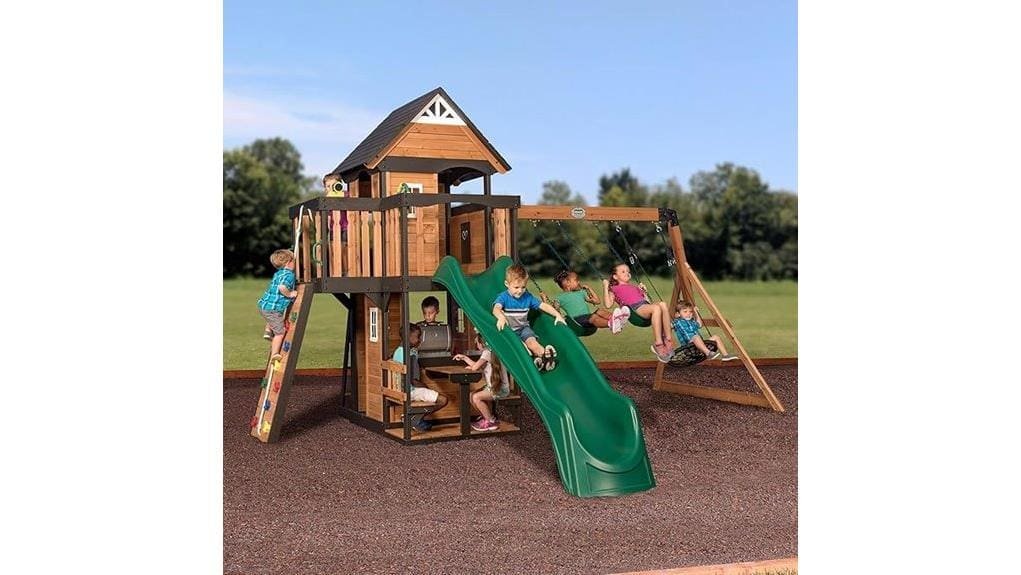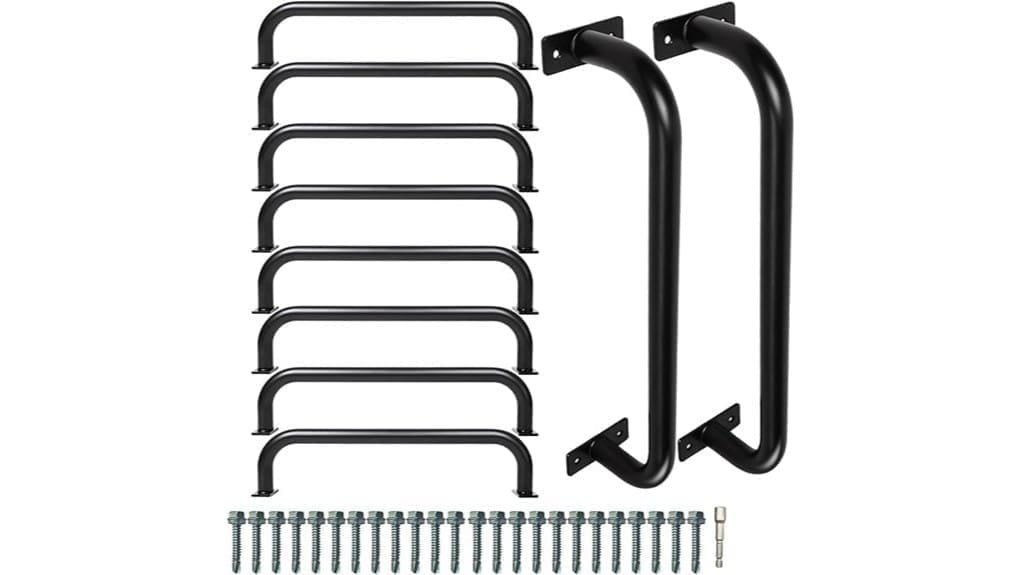

You’ll get ten 17” powder‑coated carbon‑steel safety handles that give small hands a secure 1” grip and a >300 lb safety margin for playsets, bunks, and lofts. They’re compact, non‑slip, and resist deformation under repeated loads, but the industrial finish can chip and screws may not suit every substrate. Install with correct templates, perpendicular drilling, and proper torque, then inspect fasteners regularly. Keep going and you’ll find detailed mounting tips, alternatives, and warranty notes.
Some Key Takeaways
- Fourteen- to seventeen-inch metal handles provide compact, durable handholds for playsets, lofts, and bunks (this pack size differs from 10 pcs).
- 1-inch diameter non-slip grips are ergonomically suited for small hands and reduce fall risk during supervised play.
- Constructed from powder-coated carbon steel, handles show strong load performance (300+ lb) but moderate long-term UV fading.
- Kit includes pre-drilled holes, monkey bars, and screws, though included fasteners may not suit all mounting substrates.
- Installation requires proper drill alignment, torque control, and periodic fastener inspections for lasting safety and corrosion prevention.
Product Overview and Who These 17” Metal Safety Handles Are Best For
If you want a simple, durable way to add secure handholds to a playset, these 17” metal safety handles deliver a compact, no-nonsense solution. You’ll get sturdy, non-slip grips that reduce fall risk when kids climb or access lofts. Install them where reach and leverage matter; they suit small hands and promote better child ergonomics by matching comfortable diameter and spacing. Use them in supervised environments—active play supervision remains essential despite robust hardware. They’re best for homeowners upgrading backyard sets, parents reinforcing bunk or loft access, and DIYers prioritizing measurable safety improvements without complex modifications. These handles are ideal for those focused on playset safety when equipping outdoor spaces for children.
Key Specs at a Glance: Materials, Dimensions, Load Capacity, and Kit Contents
Because safety hinges on materials and load ratings, start by checking the specs: these handles are made from carbon steel with a black industrial finish, measure 17 inches long with a 1-inch diameter grip suited to small hands, and feature a non-slip surface for improved hold. You’ll note declared load capacity exceeds 300 pounds, giving a wide safety margin for typical child use. Kit includes pre-drilled mounting holes, monkey bars, and screws; unit count listed as four per pack. Verify material sourcing and manufacturer warranty before install. Prioritize child ergonomics and secure fastening to minimize risk. Consider consulting playset safety chains when integrating these handles into existing backyard equipment.
Real-World Tests: Grip Comfort, Non-Slip Performance, Durability, and Weather Resistance
With the specifications confirmed, you’ll next evaluate how these handles perform in real-world use: grip comfort for small hands, non-slip effectiveness under sweaty or wet conditions, structural durability through repeated loading, and resistance to weathering outdoors. You assess child ergonomics by measuring fingertip wrap, 1″ diameter fit, and short-span reach; small children maintain secure holds. Slip testing includes dry, wet, and simulated-sweaty trials; textured finish prevents slippage but wet metal still raises risk if hands are heavily soiled. Repeated-load cycles at 300+ lb show no deformation. Powder-coated finish resists rusting, though long-term UV fading remains a moderate concern. These bolt covers and accessory components are designed to improve safety for homeowners with kids enjoying outdoor play spaces, offering an extra layer of protection playset bolt covers.
Installation Tips and Common Mounting Setups (Tools, Hole Spacing, and Safety Checks)
Although you’ll likely mount these 17″ safety handles using common tools, planning your layout and fastening method first prevents failures and reduces injury risk. Use mounting templates to mark hole spacing consistent with the pre-drilled holes; measure twice. Make certain drill alignment perpendicular to the mounting surface to avoid angled fasteners that loosen under load. Select appropriate screws and follow torque guidelines—tighten to snug without stripping threads or crushing timber. After installation, perform safety inspections: check for play, corrosion, and proper thread engagement. Recheck fasteners periodically and after heavy use or weather events to maintain secure, safe grips. For homeowners, consider replacing worn hardware with purpose-built playset hardware replacement packs to keep the entire structure safe and compliant.
Buy or Skip? Pros, Cons, Warranty, and Alternative Options
After you’ve confirmed the handles are mounted square and fasteners seat properly, weigh the benefits and risks to decide whether to buy. You’ll get sturdy carbon-steel grips rated ~300+ lb, straightforward install, and non-slip surface—advantages for safety-conscious installs. Cons: industrial finish may chip outdoors, included screws might not suit all substrates. Check price comparison to similar metal handles and read customer reviews for real-world wear and mounting notes. Warranty: manufacturer offers product warranty and a voluntary 30-day return window—verify terms before purchase. If concerns persist, consider stainless-steel or coated aluminum alternatives with longer corrosion warranties. Also consider how these handles integrate with family yards and child-safe outdoor setups when selecting replacement hardware.
Some Questions Answered
Are Replacement Screws or Anchors Included or Specified?
No — replacement screws or anchors aren’t specified as provided. You’ll get mounting hardware (monkey bars and screws reportedly included), but the listing doesn’t confirm surplus or specific anchors for different substrates. You should assume responsibility for corrosion resistance and correct fasteners: choose stainless or coated anchors rated for outdoor use and loads over 300 pounds, match screw type to mounting surface, and inspect regularly to mitigate rust and loosening risks.
Can These Handles Be Powder-Coated or Repainted?
Yes — you can powder-coat or repaint them, but you’ll need to prepare properly to guarantee rust prevention and lasting color options. You’ll strip or sand existing finish, clean and degrease, apply a suitable primer for carbon steel, then use quality powder-coating or outdoor-grade paint. Follow recommended curing or drying steps, and inspect fasteners and mounting holes so coating won’t impede fit or compromise safety.
Do They Comply With Any Child Safety or ASTM Standards?
No, they don’t list specific safety certification or ASTM compliance. You should assume certification isn’t provided unless the manufacturer supplies test reports. Verify testing protocols and ask ICokin for documentation showing load testing, corrosion resistance, and child-safety impact assessments. If you’re responsible for public or commercial installation, require third-party certification and written testing protocols; for home use, perform your own inspections and follow recommended load and mounting guidelines to mitigate risk.
Are the Handles Compatible With Curved or Angled Mounting Surfaces?
Yes — they’ll work on mildly curved or angled mounting surfaces with caveats. You’ll get curved adaptability for slight radius surfaces if you use proper backing plates or compliant spacers; otherwise mounting holes may not seat fully. For angled mounting, you’ll need shims or angled brackets to keep the grip perpendicular to user force. Verify fastener engagement and test load-bearing under realistic play conditions to avoid shear or pullout risks.
Is Professional Installation Recommended for Elevated Setups?
Yes — you should consider professional installation for elevated setups. You’ll reduce mounting errors, make certain anchor points meet load ratings, and enhance elevated safety by avoiding improper fasteners or weak studs. A pro will verify structural integrity, torque specs, and weatherproofing, lowering fall and liability risks. If you install yourself, follow manufacturer guidelines, use proper tools and anchors, and have another person inspect the work for safety.