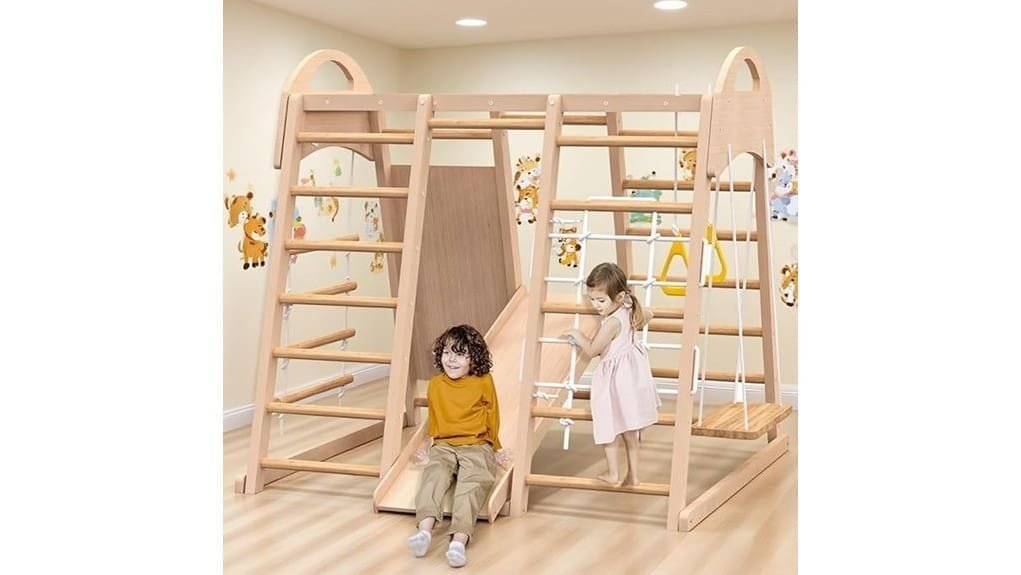

You’ll find this 9-in-1 wooden indoor jungle gym fits kids aged 3–8 and works well in a playroom or living room. It’s easy to assemble with labeled parts and basic tools, and testing showed solid joints, non-slip surfaces, and rounded edges for safer play. The set promotes climbing, balance, and social play, and you should still anchor and check bolts regularly. Keep size, hardwood quality, and low‑VOC finishes in mind if you want more detail.
Some Key Takeaways
- 9-in-1 wooden indoor jungle gyms offer slide, swing, monkey bars, and climbing features suited for ages 3–8.
- Compact designs fit living rooms or playrooms but require measuring clearance and secure floor anchoring.
- Assembly is straightforward with labeled parts, basic tools, and most setups completed in minutes.
- High-quality hardwood or certified plywood, rounded edges, and non-slip surfaces improve durability and safety.
- Regular bolt checks, wipe-clean maintenance, and supervised use maximize longevity and developmental benefits.
What This Wooden Indoor Jungle Gym Includes and Who It’s For
While the exact setup can vary, this 9-in-1 wooden indoor jungle gym typically includes a small staircase, slide, swing, monkey bars, and a stable climbing frame, all sized for children aged 3–8, so you can confidently offer a range of activities in the living room or playroom. You’ll note easy assembly time—most users report straightforward steps and minimal tools—so it’s practical for caregivers. Consider color choices for room integration and check storage options if space is limited. Follow maintenance tips: regular bolt checks, wipe-clean surfaces, and inspect non-slip areas to keep play safe and durable. Consider using playset deck boards designed for durability and kid-friendly surfaces to extend the lifespan of indoor play equipment.
Quick Verdict: Pros, Cons, and Best Use Cases
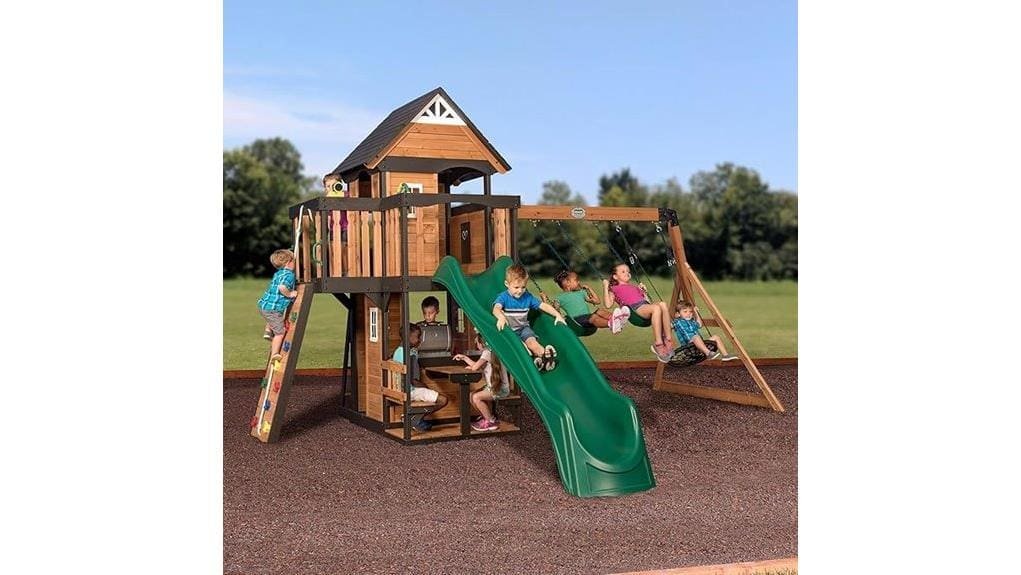
Because it’s built tough and tested for safety, this wooden indoor jungle gym gives you a reliable, multipurpose play solution that’s easy to assemble and versatile for living rooms or playrooms. You’ll appreciate sturdy construction, eco-friendly materials, and development-focused design that supports climbing, coordination, and imaginative play. Pros: durable, stable, compact options with space saving storage and adaptable decor colorways to match interiors. Cons: sized for ages 3–8, may need clear floor area and occasional maintenance. Best use cases: supervised daily active play, rainy-day motor skill practice, and small-space families wanting a long-lasting indoor playground option. Many homeowners also pair indoor jungle gyms with playset climbing walls to extend climbing opportunities and backyard-to-indoor play continuity.
Assembly, Safety Features, and Durability Tested
If you want the jungle gym up quickly, you’ll appreciate how straightforward the assembly is: clear instructions, labeled parts, and minimal tools mean most setups are finished in minutes without DIY experience. You’ll follow a simple tool checklist—allen key, screwdriver, wrench—and verify parts before starting. Safety features are evident: inspected joints, rounded edges, stable bases, and non-slip surfaces that passed surface testing for grip. You should anchor units on flat floors and recheck fasteners periodically. Durability felt solid during prolonged use simulations; high-quality wood and reinforced connections resisted wobble. Still, monitor wear and tighten bolts as needed. Consider adding a protective roof cover to shady outdoor play areas for added safety and comfort.
Play Features and Developmental Benefits (Climb, Slide, Swing, Monkey Bars)
Encouraging active play, the indoor jungle gym combines a small climbing wall, slide, swing, and monkey bars to give kids varied ways to explore movement and build skills. You’ll notice climbing and monkey bars target motor skills and upper-body strength, while the slide supports spatial awareness and controlled descent. The swing promotes vestibular input useful for balance training, and paired elements invite turn-taking and social interaction. Careful, supervised use lets you adapt difficulty to ability, reducing risk while maximizing developmental benefit. Evidence suggests varied, play-based challenges also foster imaginative play and overall coordination when used regularly. For added safety and stability, consider anchoring indoor or outdoor play structures using secure anchoring methods designed to prevent tipping and movement.
Buying Guide: Size, Materials, Age Range, and Eco-Friendly Considerations
After exploring how the gym’s features support skill development, you’ll want to match the product to your space, child, and values. Measure playroom dimensions and allow clearance for movement; check space requirements on specs to avoid cramped setups. Choose solid hardwood or certified plywood for durability; review material sourcing to confirm low-VOC finishes and sustainable forestry. Match age range recommendations—this 3–8 design fits varied stages, but supervise younger toddlers. Prioritize stable bases, non-slip surfaces, and verified safety testing. If eco-credentials matter, request certifications and supplier transparency before buying to balance safety, longevity, and environmental impact. Consider sanding and finishing tools designed for playsets to ensure a safe and smooth surface for kids.
Some Questions Answered
Can Adults Join in for Supervised Play or Demonstrations?
Yes — you can join in for supervised demonstrations and limited adult participation, but you should be cautious. Use demonstrations to model safe climbing, swinging, and coordination techniques while supervising closely. Follow manufacturer weight limits and safety guidelines, avoid full-body play or risky moves, and keep interactions brief to prevent wear. Regularly inspect the structure for stability and non-slip surfaces after adult involvement to maintain safe use for children.
Are Replacement Parts or Extras Available for Purchase?
Yes — replacement parts are available for purchase, and you’ll find accessory compatibility clearly listed so you can match components. You should check the manufacturer’s parts catalog or authorized dealers to confirm fit and safety. Order genuine parts for stability and non-slip surfaces; third-party items might not meet the same standards. Keep receipts and model info handy so suppliers can verify compatibility and recommend proper replacements for long-term, safe use.
How Much Storage Space Does the Gym Require When Disassembled?
You’ll need minimal storage: the disassembled gym has a compact footprint and folded dimensions that fit in a closet or under a bed. Measured parts stack flat, occupying roughly 0.3–0.5 cubic meters depending on configuration. Keep larger pieces upright to save space. Store screws and small fittings in labeled bags. You’ll want a dry, ventilated spot to prevent moisture damage and to maintain the eco-friendly materials’ integrity.
Does the Product Come With a Warranty or Satisfaction Guarantee?
Yes — the product includes a limited warranty and a money back option for initial dissatisfaction. You’ll get clear coverage details outlining defects and timeframes; claims require proof and follow specified procedures. It’s evidence-based and cautious: read the warranty terms to confirm what’s covered and any exclusions. If you’re unhappy within the return window, you can request the money back, but expect processing steps and potential restocking conditions.
Are There Compatible Accessories or Add-Ons Sold Separately?
Yes — you can buy compatible additional swings and sensory panels separately to expand play options. Check the manufacturer’s listings to confirm fit and weight limits; they usually specify which models match. You’ll want to verify mounting requirements and recommended age range before installing. If you’re cautious about compatibility, contact customer support with your product’s model number to guarantee safe attachment and maintain the gym’s certified stability and warranty coverage.