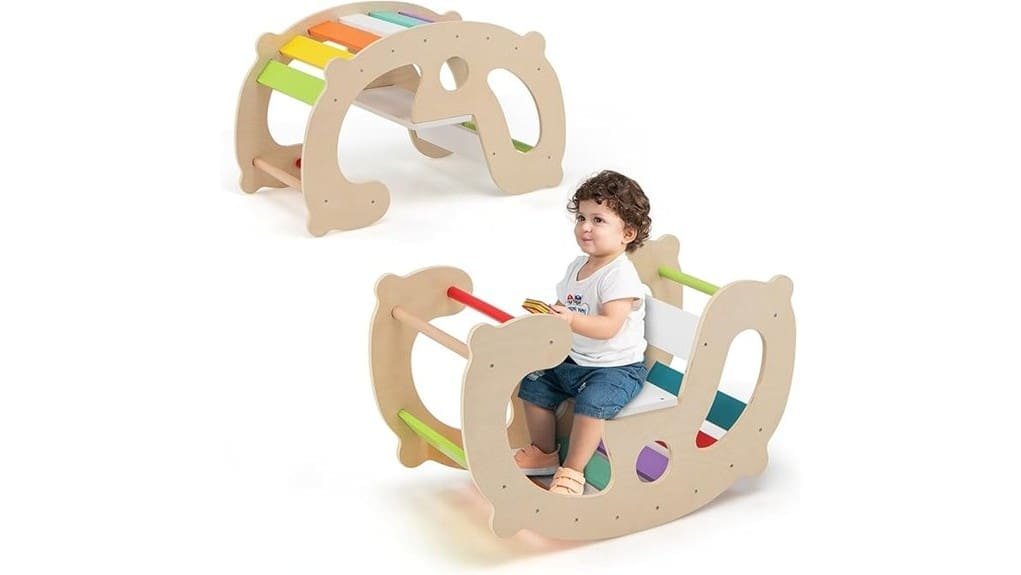

You’ll find the HONEY JOY Wooden Rocking Climbing Arch is a well‑made, ASTM/CPSIA‑certified beech plywood rocker/climber that supports balance and gross‑motor skills for 12–60 month olds. It’s lightweight yet sturdy, with splinter‑free edges, anti‑rollover devices, angle limiters, and an easy‑grip handle for predictable rocking and safe mode changes. Contoured seating and eco finishes suit indoor or outdoor play. It’s ideal for caregivers wanting durable, developmentally focused play; keep going to learn specifics and buying tips.
Some Key Takeaways
- Sturdy beech wood construction with splinter-free edges and eco finishes delivers durable, child-safe performance for toddlers.
- ASTM and CPSIA certification plus anti-rollover devices and angle limiters ensure predictable, low-risk rocking and climbing.
- Dual-mode flip mechanism switches quickly between seated rocker and climbing arch, supporting balance and gross-motor development.
- Compact 14.5-pound design suits small playrooms or outdoor setups, but check dimensions against available space.
- Best for 12–60 month-olds; consider Pikler arches or convertible rockers if weight, resale value, or different play profiles matter.
What This Review Covers and Who It’s Best For
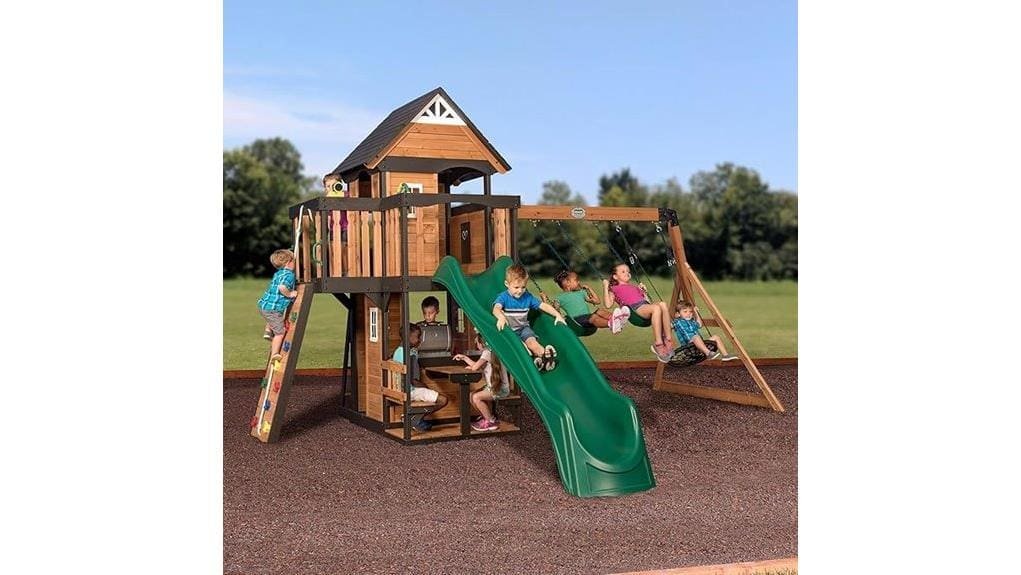
While this review looks at the HONEY JOY Wooden Rocking Climbing Arch from multiple angles, you’ll get focused, development-centered insights on safety, build quality, and developmental benefits for toddlers. You’ll learn who benefits most—caregivers of 12–60 month-olds seeking a dual-purpose rocker/climber that supports balance, coordination, and strength. You’ll see evidence-based notes on stability features and age-appropriate use, plus practical setup and supervision tips. The review also covers how the arch fits nursery aesthetics, complements playroom layouts, and pairs with simple storage solutions to keep spaces tidy and encourage independent play. It’s especially useful for homeowners creating an outdoor play oasis who want durable, toddler-friendly equipment that complements their property’s outdoor spaces and encourages outdoor time for young children, including guidance on integrating the arch into larger playset layouts.
Design, Materials, and Safety Features That Matter to Parents
Because toddlers learn through movement, the HONEY JOY Wooden Rocking Climbing Arch’s design prioritizes tactile, stable play that supports motor development while minimizing hazards. You’ll notice beech wood bars and plywood with splinter-free edges, ASTM and CPSIA certification, and anti-rollover devices that reduce tipping risk. Angle limiters and an easy-grip handle guide safe rocking; a smooth backrest and spacious seat support posture. The compact dimensions and 14.5-pound weight balance portability with solidity. The color palette is muted and developmentally appropriate, and eco finishes reduce chemical exposure. Clear assembly and documented warranty give caregivers evidence-based reassurance. The site emphasizes playset safety handles as essential products for homeowners with kids who enjoy outdoor play.
How It Performs in Use: Stability, Comfort, and Play Modes
When you set the HONEY JOY Wooden Rocking Climbing Arch in motion, its stability and comfort become immediately apparent: anti-rollover devices and angle limiters keep rocking predictable, the wide seat and smooth backrest support posture, and the easy-grip handle gives toddlers a secure hold as they shift between rocking and climbing modes. In stability testing you’ll note firm base contact and minimal wobble under typical loads. Comfort assessment shows supportive contours that reduce fatigue during short sessions. Mode shifts are quick and intuitive with a simple flip, enabling play versatility between seated rocking and active climbing while maintaining safety and developmental engagement.
Developmental Benefits and Age-Appropriate Activities to Try
Although toddlers explore movement differently at each stage, the HONEY JOY Wooden Rocking Climbing Arch supports measurable gains in balance, coordination, and gross motor strength across the 12–60 month range. You’ll see improved motor planning as children sequence climbs, turns, and controlled descents. Sensory integration benefits when they combine vestibular input from rocking with tactile grip on smooth beech bars. Age-appropriate activities: 12–24 months — supervised supported rocking and tactile exploration; 24–36 months — guided climbing, simple obstacle courses; 36–60 months — imaginative play scenarios and turn-taking games that boost social interaction and cooperative problem-solving. This playset also complements backyard setups by pairing well with balance pods to expand gross motor challenges and create diverse outdoor play opportunities.
Final Verdict, Alternatives, and Buying Tips (Size, Warranty, Where to Buy)
If you want a sturdy, developmentally useful play piece that doubles as both a rocker and climber, the HONEY JOY Wooden Rocking Climbing Arch delivers clear benefits for balance, coordination, and motor planning across the 12–60 month range. Final verdict: you’ll get a well-made, ASTM/CPSIA-compliant toy with long term durability and strong developmental value. Consider alternatives like simple Pikler arches or convertible rockers if space or weight matters. Check size against your play area, confirm warranty length and the voluntary 30-day return policy, and compare shipping options and resale value when choosing where to buy. Many homeowners also incorporate playset climbing walls into their yards to expand gross motor challenges with outdoor play structures.
Some Questions Answered
Does It Require Adult Supervision at All Times During Play?
Yes — you should provide adult supervision during play. Following age guidance (12–60 months), you’ll need to monitor toddlers as they rock, climb, and shift between modes to prevent falls or misuse. Supervision helps you enforce safe behaviors, adjust posture, and intervene if instability occurs. Evidence-based, developmental-focused oversight supports motor skill growth while minimizing risk; as competency improves, you can gradually allow more independent, but still occasional, checks.
Can It Be Painted or Customized Safely?
Yes, you can customize it, but choose non-toxic paint options and preserve finish safety. Use water-based, low-VOC paints or child-safe stains and seal with a certified non-toxic topcoat. Sand gently, avoid inhalation, and let each coat cure fully before use. Customizing can support sensory and color-learning development, but keep textures smooth and hardware secure to maintain structural stability and developmental benefits for toddlers.
Are Replacement Parts Available From the Manufacturer?
Yes — you can get replacement parts: the manufacturer support confirms spare availability for common components. You’ll contact HONEY JOY for specific screws, beech bars, or angle limiters; they verify parts meet ASTM/CPSIA safety standards. This lets you maintain stability and developmental benefits like balance practice. Keep your purchase details and serial/model number handy when requesting parts to speed service and guarantee the correct, certified replacements arrive.
How Much Weight Can the Arch Support When Used as a Climber?
The arch supports a weight capacity of about 66 pounds when used as a climber, matching typical toddler equipment limits. You should follow safety guidelines: supervise children, make certain assembly is correct, check anti-rollover devices and angle limiters, and limit use to one child within the 12–60 month range. Regularly inspect for wear, tighten fittings, and stop use if parts or stability are compromised to protect development and prevent injury.
Is It Easy to Disassemble for Storage or Moving?
Yes — you can disassemble it fairly easily for storage or moving. The simple folding mechanism and clear manual let you reduce the storage footprint quickly, keeping parts minimal and organized. Because assembly uses basic fasteners and a straightforward frame, you’ll take it apart without special tools. This makes it practical for rotating play spaces, saves room, and supports developmental routines by letting you set up or stow the arch as needs change.