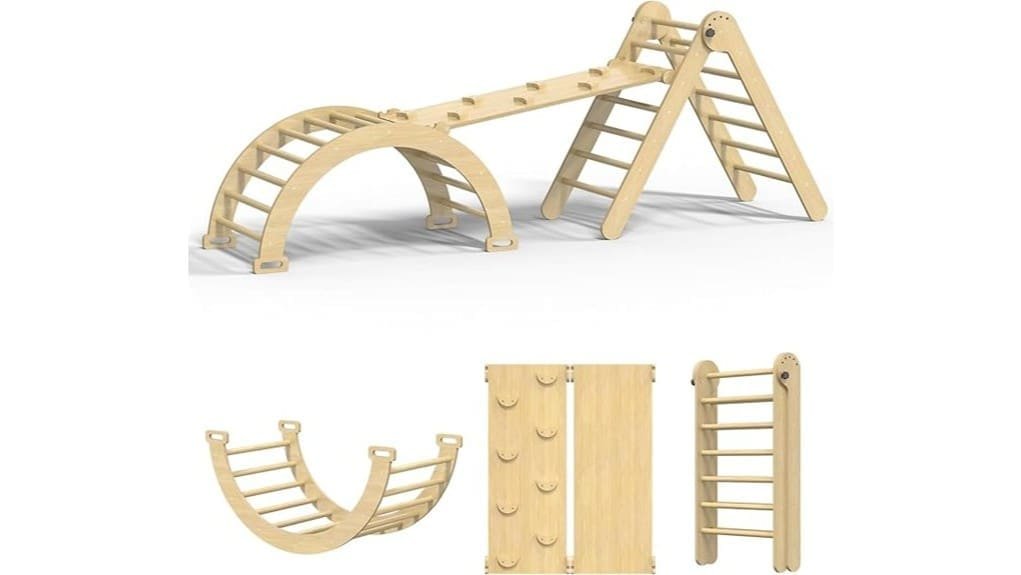

You’ll find the CMFYDAILY Pikler Triangle set is a versatile 7‑in‑1 wooden play system that supports toddlers’ balance and climbing progression from about 24 months to early school age. It converts between ramps, slides, arches, and jungle‑gym layouts, with adjustable firmness and angles to scaffold motor skills. Constructed from New Zealand pine with a child‑safe finish, it held ~160 lb in home tests and stayed stable. Keep supervising and using mats, and keep reading for setup, safety, and performance details.
Some Key Takeaways
- CMFYDAILY Pikler set is a 7-in-1 modular wooden play system ideal for toddlers through early school age (≈24 months–7 years).
- Made from New Zealand pine with non-toxic finishes, it supports realistic home loads up to about 160 lb.
- Configurations include foldable triangle frame, adjustable climbing board/ramp, slide surface, arch, and jungle-gym layouts.
- Promotes balance, strength, and problem-solving; adjustable firmness and angles scaffold progressive motor challenges.
- Best for supervised indoor/home or backyard use; requires careful assembly, quarterly hinge maintenance, and soft fall surfaces.
What the CMFYDAILY Pikler Triangle Set Includes and How It Converts
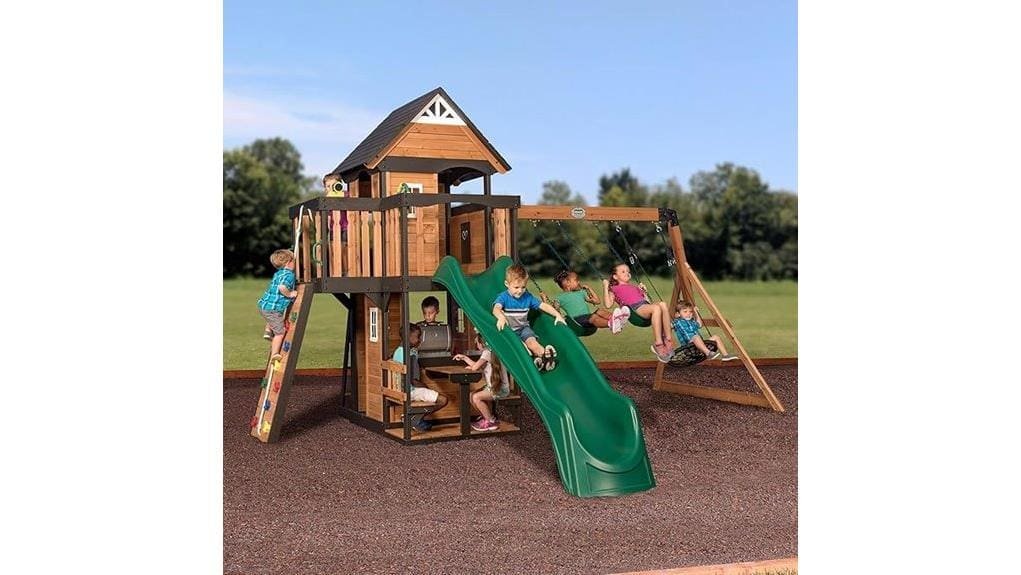
Although it looks like a single piece of furniture, the CMFYDAILY Pikler Triangle Set actually ships as a 7-in-1 play system you can reconfigure to match a child’s skill level: the package includes a foldable climbing triangle frame, a climbing board/ramp with adjustable screw fittings, a slide surface, and components that convert into an arch, jungle-gym layout, and other ramp/slide combinations. You’ll find modular playstations that let you rotate challenges—from low ramps to taller climbs—using convertible accessories for secure shifts. Evidence suggests varied setups support progressive motor learning; you’ll adjust firmness, angle, and form to scaffold balance, strength, and exploration safely. This product is ideal for homeowners looking to create an outdoor playset haven in their backyard for kids who enjoy outdoor spaces on their property.
Who Should Buy This Pikler Triangle (Ages, Settings, and Play Styles)
Now that you know how the set converts across multiple configurations, consider who will get the most developmental value from it. You’ll find this Pikler best for toddlers reaching walking and climbing milestones through early school age (roughly 24 months–7 years). If you prioritize progressive gross motor challenges, independence, and confidence-building, it fits homes, Montessori rooms, and nurseries. Caregivers wanting guided exploration, balance practice, and sensory play opportunities will appreciate its adaptable modes. It supports structured activities and free play, so if you value evidence-based developmental gains—motor skills, coordination, problem-solving—this set’s a practical, long-lasting choice. It’s an excellent addition to an outdoor play oasis for families who want durable, kid-friendly equipment that enhances backyard play and learning, especially when integrated into outdoor spaces.
Real-World Performance: Sturdiness, Load Capacity, and Materials
When you put the CMFYDAILY Pikler Triangle through everyday use, its New Zealand pine construction and child-safe finishes deliver a noticeably solid feel—boards don’t flex under typical toddler loads and joints stay tight during climbing and sliding. You’ll find the advertised 160 lb load capacity realistic in home testing; durability testing by caregivers shows no wobble with multiple children using different configurations. The smooth, non-toxic finish safety minimizes splinters and wipes clean after messy play. For developmental play, the set supports confident weight-bearing, balance practice, and progressive challenges while remaining practical and robust for regular indoor use. Its design complements a variety of backyard play areas and can integrate well with other wooden playsets for expanded outdoor play.
Setup, Folding, Safety Tips, and Space Requirements
Having seen how the pine construction and secure joints hold up under regular play, you’ll want a straightforward setup and folding routine to keep the triangle safe and space-efficient. Assemble on a flat surface, tighten screws per instructions, and test load capacity before child use. Fold using the adjustable screws to lock hinges; perform regular hinge maintenance—clean, lubricate, and retorque fasteners quarterly. For space planning follow clearance guidelines: allow at least 3–4 feet around the unit and soft landing surface beneath. Supervise active play, use mats for fall mitigation, and position away from furniture, stairs, or windows. Choose pressure-treated timbers for durable outdoor play to ensure long-lasting performance in outdoor settings.
Verdict: Pros, Cons, and When to Choose This Model
Although compact and foldable, the CMFYDAILY Pikler Triangle Set delivers sturdy, Montessori-friendly climbing opportunities that support balance, strength, and independent play for toddlers through early elementary ages. You’ll appreciate its versatile 7-in-1 configurations, solid New Zealand pine, and 160-lb load capacity that match developmental goals and classroom use. Pros: promotes motor skills, adaptable layouts, space-saving foldability. Cons: potential durability concerns long-term under heavy institutional use; assembly requires careful tightening. Price comparison favors families wanting quality wooden sets versus cheaper plastic alternatives. Choose this model if you prioritize developmental value, natural materials, and moderate-duty indoor use. It also complements outdoor playset upgrades like rock climbing holds to extend climbing practice and challenge as children grow.
Some Questions Answered
Does It Require Regular Maintenance or Refinishing Over Time?
Yes — you’ll want light upkeep. With visible wood grain and child-safe finishes, the pine frame won’t demand heavy refinishing, but you should inspect screws and joints regularly and sand small scuffs. Every 6–12 months apply a thin coat of protective oiling designed for kids’ furniture to restore finish and repel dirt. This practical routine supports durability, maintains grip for developing motor skills, and keeps the toy safe and attractive.
Can Additional Accessories Be Attached or Customized?
Yes — you can attach additional accessories and customize it. The frame accepts attachable ramps and modular pieces when fitted correctly; screws and foldable joints let you secure add-ons without compromising load capacity. For safety, test stability after changes. You can also do custom paintjobs using child-safe finishes to support sensory and aesthetic development, but avoid heavy coatings that alter grip or add toxic VOCs. Follow manufacturer guidance.
Is Assembly Required by Two Adults or Manageable Solo?
You can assemble it solo, but a two person approach speeds setup and improves safety. Time required is about 30–60 minutes depending on experience. It’s solo friendly if you’ve got basic DIY skills and patience; you’ll need common tools (screwdriver, wrench) included or typical household tools. For heavier lifting or aligning panels, having a second adult helps guarantee secure fastening and correct foldable-frame adjustments for safe play.
Are Replacement Parts or Screws Available From the Manufacturer?
Yes — you can request manufacturer replacements; screw availability is provided through the seller. If a part wears or a screw goes missing, contact the manufacturer or retailer for replacement parts and guidance. This practical option supports continued safe, developmental play by keeping the structure secure and load-rated. Keep purchase records and photos to speed requests, and confirm compatible screws before installing to maintain balance and child-safe finishes.
Does It Meet Specific Toy Safety Certifications or Standards?
The product listing doesn’t state specific toy safety certifications, so you can’t assume formal certification. Check material sourcing and safety labeling with the seller before buying; request documentation like ASTM, CPSIA, EN71, or FSC wood sourcing and non‑toxic finish test reports. Practically, verify batch certificates or photos of labels, confirm screws/parts meet child‑safe standards, and keep records to support developmental, safe indoor play for toddlers.