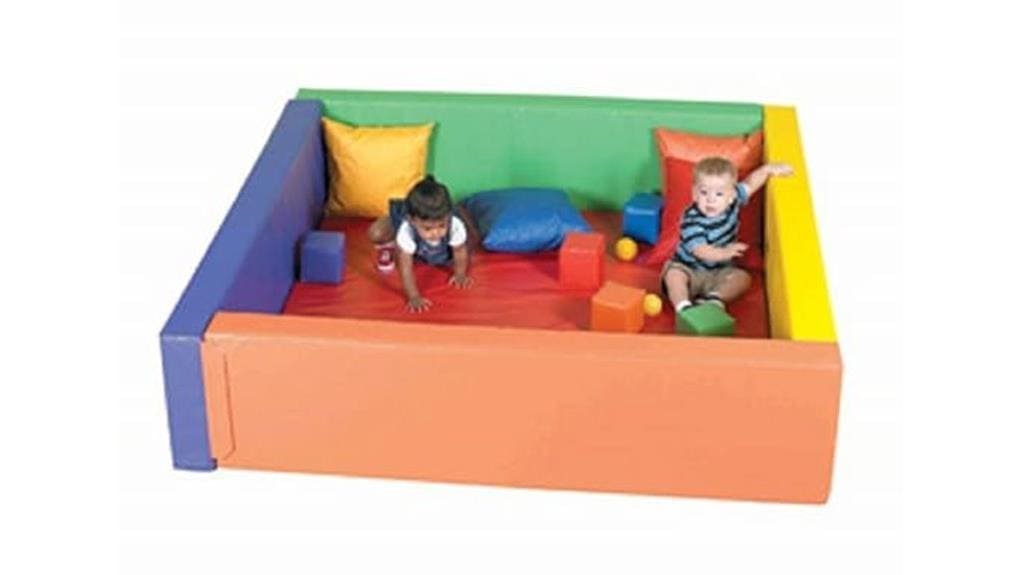

You’ll find the Children’s Factory Lollipop Play Yard is a low-profile, GREENGUARD-certified soft play space that’s ideal for supervised toddlers; it’s 73 x 73 x 18 inches with 5-inch foam walls, a padded floor, and wipe-clean vinyl covers so you can monitor air quality, hygiene, and wear. Assembly uses hook-and-loop flaps and one caregiver can move it; inspect seams and welds regularly. It’s great for crawling and quiet rest, and more specifics follow below.
Some Key Takeaways
- Soft, low-profile 73″ x 73″ play yard with 18″ walls ideal for supervised toddlers’ play, crawling, and naps.
- Constructed from 5-inch foam cores with 14 oz PVC-free vinyl cover, GREENGUARD certified for low emissions.
- Hook-and-loop assembly makes single-caregiver setup easy; inspect seams and welds during installation.
- Wipe-clean vinyl simplifies hygiene; spot-clean spills with mild detergent and monitor for surface abrasion.
- Best for preschools, daycares, and homes needing contained, visible play; not for unsupervised climbing or older kids’ rough play.
Quick Verdict: Suitability for Preschools, Daycares, and Homes
Cutting to the chase: the Lollipop Play Yard fits well in preschools, daycares, and homes where you need a low-profile, soft play area that’s easy to supervise. You’ll appreciate its clear age appropriateness for toddlers—design, padding, and GREENGUARD certification reduce airborne concerns and support safe development. You can assess space compatibility quickly: 73 by 73 inches footprint and 18-inch walls keep footprint modest and sightlines open for caregivers. Installation’s simple hook-and-loop walls and wipe-clean vinyl help maintain hygiene and turnover. Use it for supervised play, crawling practice, and quiet rest, not unsupervised climbing or older children’s rough play. As with any play area on a deck, consider applying a kid-safe deck sealer to nearby wood surfaces to keep the environment safe and low in airborne contaminants.
What You Get: Exact Size, Materials, Construction, and Safety Details
Now that you know where the Lollipop Play Yard fits, let’s look at what you actually get: a 73 x 73 x 18-inch square play area with four 18-inch-high side walls made from 5-inch-thick foam, a padded floor, and a 14 oz. vinyl outer cover that’s PVC-free vegan leather over a foam core. You’ll receive five foam pieces forming walls and floor; pillows/blocks aren’t included. The foam composition resists compression while meeting GREENGUARD indoor air quality standards. Stitching, hook-and-loop flaps, and welds show consistent construction. Inspect seams and cover for vinyl durability; certified materials reduce off-gassing risks. Choose compatible wood filler products when maintaining nearby wooden playsets to keep outdoor play areas safe.
Set Up, Cleaning, and Daily Use: Real-World Durability and Caregiver Visibility
While assembling the Lollipop Play Yard is straightforward—attach the five foam pieces using the hook-and-loop flaps and align the seams—you should inspect each weld and stitch before first use to make certain consistent bonding and no exposed foam edges; the lightweight components make positioning easy for one caregiver, but two people will speed placement and reduce strain when situating the 73 x 73-inch unit. Use assembly tips: work on a flat surface, verify wall squareness, and tighten seams. Wipe vinyl regularly; for spills spot-clean promptly with mild detergent. Monitor seams and surface abrasion weekly to assess durability and caregiver visibility. Keep playsets protected in winter with a proper playset winter cover to extend the life of outdoor accessories.
Benefits and Drawbacks: Play Value, Learning Outcomes, and Limitations
Because the Lollipop Play Yard combines soft, contained boundaries with a low-profile design, it delivers clear play value for toddlers while keeping caregiver supervision and safety front-and-center. You’ll observe improved motor skills from crawling, pulling up, and low-impact climbing on the padded floor and 5-inch walls. The rainbow colors encourage imaginative play and sensory exploration—visual contrast and vinyl texture support cognitive and tactile development. In group settings, kids practice sharing and turn-taking, informing group dynamics. Limitations: small footprint limits vigorous gross-motor activity, and foam walls won’t replace structured climbers; monitor wear and hygiene routinely. It pairs well with other backyard play products for a complete sandbox experience.
Final Buying Guide: Best Use Cases, Alternatives, and Where to Buy
Having considered the play yard’s developmental benefits and limits, you can decide where it will add the most value and when another solution fits better. For toddlers, it’s age appropriate for supervised play, naps, and gross-motor practice; pair it with clear space planning to keep sightlines and safe access. Alternatives include larger modular soft-plays or gated playpens if you need climbing features or portable containment. Check purchase options—manufacturer, specialty edu-supplies, and major retailers—for best pricing and delivery. Confirm GREENGUARD certification, cleaning instructions, and warranty info before buying. Prioritize visibility, durable vinyl, and thorough caregiver supervision. For outdoor installations, consider waterproofing and weather-resistant materials to protect the play yard and surrounding surfaces, especially when planning use in home yards with playset waterproofing needs.
Some Questions Answered
Are Replacement Foam Walls or Parts Available for Purchase?
Yes — replacement availability depends on the manufacturer; you should contact customer service directly. You’ll want to ask if they sell replacement foam walls, PVC-free vinyl panels, or hook-and-loop flaps, and request serial/model CF322-219 and UPC for faster service. Confirm material matching, GREENGUARD certification retention, shipping costs, and lead times. Keep documentation and photos for safety verification and warranty claims to guarantee parts meet original specs and certifications.
Can Additional Panels Be Attached to Expand the Play Yard?
Yes — you can expand via panel expansion: the modular design uses hook-and-loop flaps to attach additional panels securely. You’ll need manufacturer-compatible panels or approved replacements to maintain stability and GREENGUARD safety standards. When expanding, make certain floor space, caregiver sightlines, and wall height remain appropriate for supervision and age-appropriate use. Check weight distribution and fastenings after assembly, and verify any added panels match materials and cleaning specifications for safety and durability.
Is This Play Yard Suitable for Outdoor, Weather-Protected Use?
No, you shouldn’t use it outdoors long-term; it’s designed for indoor use only. Its PVC-free vegan leather and 14 oz. vinyl aren’t rated for prolonged UV exposure, so UV resistance is limited. You can use the portable design briefly in weather-protected, shaded areas, but avoid moisture, damp ground, and direct sun to prevent material degradation and mold. Always supervise toddlers and store it indoors after each outdoor use for safety and longevity.
Are There Weight Limits for Children Leaning on the Walls?
There aren’t specified weight limits for children leaning on the walls, so you shouldn’t assume heavy support; leaning safety relies on the 5-inch foam walls and 14 oz. vinyl construction, which resist light pressure but won’t bear large loads. For evidence-based safety, supervise toddlers, discourage pushing or climbing on walls, and distribute weight evenly. If a child repeatedly leans heavily, swap to more rigid barriers or contact the manufacturer for guidance.
Does the Play Yard Meet Specific Sanitation Protocols for Centers?
Yes — you can meet many center cleaning protocols and infection control standards with this play yard. You’ll wipe the 14 oz. vinyl, PVC-free vegan leather and foam surfaces with approved disinfectants; its GREENGUARD certification supports low emissions. Follow manufacturer cleaning instructions, use EPA-registered disinfectants compatible with vinyl, allow proper contact time, and rotate cleaning logs. For outbreak-level infection control, supplement with enhanced surface disinfection and district policies.