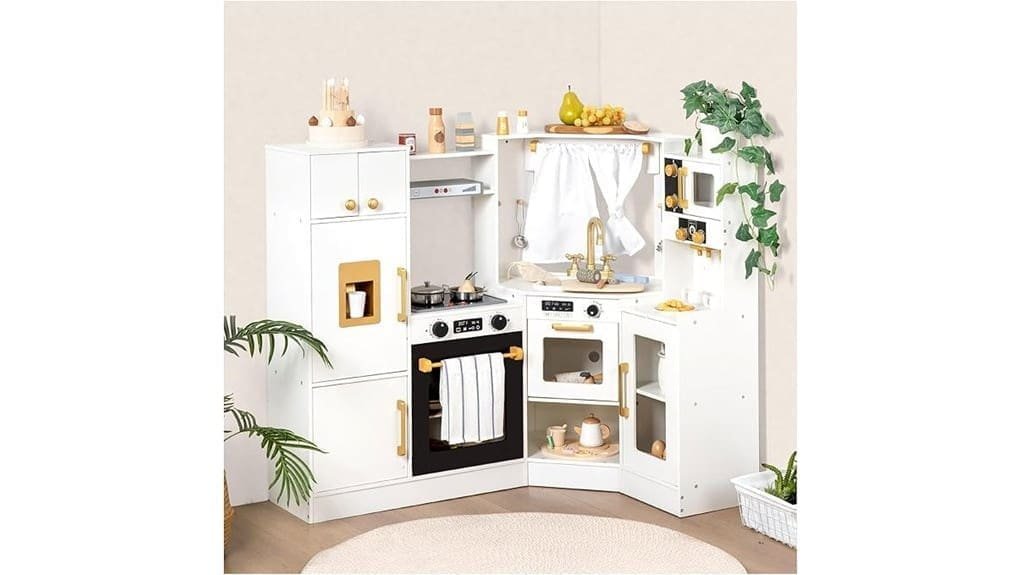

You’ll find this interactive wooden play kitchen offers realistic lights, sounds, and tactile features that support fine motor control, sequencing, and cooperative play for two kids. It uses BPA-free wood, non-toxic paint, rounded edges, and sturdy joints to reduce injury and wear. Test chimes, stove sizzle, ice-clink, and hood activation to gauge sensory feedback and turn-taking prompts. Assembly is under two hours and batteries are required. Keep going to see detailed pros, cons, and safety checks.
Some Key Takeaways
- Realistic lights, sounds, sizzling stove, and ice-maker clink create engaging sensory play and mimic real kitchen actions.
- Sturdy, BPA-free wood construction with rounded corners and non-toxic paint supports safety and durability.
- Functions like rotatable faucet, knobs, and hood fan promote fine-motor skills, sequencing, and cooperative play.
- Assembly under two hours, compact corner footprint (30.8 x 10 x 35.8 in), and two-child design suit small playrooms.
- Check individual sound/light tests, certification labels (ASTM/CPSIA), and tidy battery maintenance for long-term use.
What the Interactive Wooden Play Kitchen Includes and How It Works
The interactive wooden play kitchen includes a full set of kid-sized appliances and accessories designed to promote hands-on learning: a microwave and oven with realistic lights and sounds, a sizzling stove and functioning range hood, a rotatable sink faucet and ice maker that clinks, plus eight accessories for role-play. You’ll find features that target fine motor skills, sequencing, and cooperative play; evidence shows pretend cooking supports language and executive function. Use color customization to match developmental themes or classroom labels, and apply practical storage solutions to teach organization and turn-taking. You’ll set clear routines and scaffold play to extend learning. Many homeowners also add outdoor musical elements like playset drums to bring musical fun to backyard playsets and enhance sensory play.
Realistic Lights, Sounds, and Play Functions Tested (Microwave, Oven, Ice Maker, Stove, Hood)
Start by testing each sound and light function individually so you can observe how kids will respond and which features best support learning goals. Check microwave and oven chimes for sound realism and consistent volume; note if light effects signal “cooking” clearly. Test the ice maker’s clink and the stove’s sizzle while pressing controls to evaluate tactile feedback and whether knobs provide graded resistance for fine-motor practice. Assess the hood fan and its user interface for intuitive activation. Record which combinations promote turn-taking, cause distraction, or scaffold sequencing. Use brief observations to guide play plans and parent coaching for targeted skill development. Also consider integrating outdoor play elements like bubble play with a bubble machine to extend imaginative scenarios and encourage gross-motor activity.
Safety, Materials, and Build Quality: BPA-Free Wood, Non-Toxic Paint, Certifications
After watching how kids interact with the lights and sounds, you’ll want to check how the kitchen’s construction supports safe, sustained play: this model uses sturdy, BPA-free wood with non-toxic paint, rounded corners, and smooth edges to reduce injury risk and limit chemical exposure. You should look for ASTM and CPSIA certification labels and verify they align with local child proofing standards. Inspect joints and hardware for tight fits; good build quality resists wobble during cooperative use. Ask about finish durability testing to make certain paint won’t chip with handling. Practical checks cut risk and extend toy lifespan. Also consider appropriate wood filler choices to maintain and repair playset surfaces safely over time.
Play Value: Age Fit, Motor-Skill Benefits, Social and Cooperative Play for 2+ Kids
Because pretend kitchens mirror real-world tasks, kids as young as three quickly pick up age-appropriate routines—turning knobs, flipping switches, and pouring imaginary drinks—which builds fine motor control and sequencing skills. You’ll notice improved hand-eye coordination and bilateral hand use as they manipulate utensils and open doors. Sensory development gets a boost from lights, sounds, and varied textures, supporting attention and exploratory play. Playing with peers fosters role-taking, negotiation, and cooperative problem-solving, which accelerates language growth through scripted dialogue and new vocabulary. Guide turn-taking and scaffold complex scenarios to maximize developmental gains and encourage longer, more social play sessions. Outdoor playsets designed for toddlers also extend these benefits by promoting gross motor activity and safe imaginative play in backyard settings like an Outdoor Play Oasis.
Should You Buy It? Assembly, Sizing, Gift Ideas, Pros and Cons, and Final Verdict
If the motor-skill and social benefits above sound like what you want to encourage, consider how practical details—assembly, size, and gifting—will affect daily use and long-term value. You’ll assemble it in under two hours with clear steps; the 30.8 x 10 x 35.8-inch corner design fits small playrooms and supports two kids cooperating. As a gift, it’s great for birthdays or holidays and promotes shared, developmental play. Note electronics need proper battery disposal and maintenance. Pros: sturdy, certified, realistic features; cons: takes floor space and occasional battery costs. Resale value is reasonable if kept in good condition. Many families also pair play kitchens with outdoor easels to encourage both indoor imaginative play and outdoor creative activities.
Some Questions Answered
Are Replacement Accessories Available Separately?
Yes — you can get replacement accessories separately for extra utensils and custom knobs to maintain play value and motor-skill development. Order from the manufacturer or authorized retailers to guarantee safety standards and non-toxic materials. Swapping worn pieces supports cooperative play and fine motor practice without replacing the whole set. Keep receipts and model info handy; prompt replacements minimize downtime and sustain evidence-based learning through consistent, safe pretend-play routines.
Does It Require Batteries for Lights and Sounds?
No, it doesn’t require batteries for basic functions; it supports battery free operation for core play like the sink and knobs. You’ll find sound options are powered separately—realistic lights and sounds (ice clinking, sizzling, range hood) need batteries to activate. For developmental play, use battery-free features to promote tactile exploration and reserve sounds selectively to avoid overstimulation and encourage verbal role-play and motor-skill practice.
Is There Warranty or Return Policy Information?
Yes — the playset includes a limited manufacturer warranty and a 30-day return window; you’ll want to confirm specific terms with the seller. Keep your proof of purchase and note shipping costs for returns, as some sellers deduct them. Use the clear assembly time estimate (under 2 hours) and documented defects to support your claim. For developmental benefits, report issues promptly to make certain replacement or refund and minimize disrupted play.
Can Additional Modular Pieces Be Attached Later?
Yes — you can add pieces later. You’ll use magnetic connectors and expandable cabinets designed for simple, tool-free attachment, letting you customize play space as skills grow. This supports cooperative play, fine-motor practice, and symbolic role-play. For safety and stability, follow manufacturer guidelines on weight limits and secure attachment. Rotate modules to vary complexity and social scenarios, promoting sustained engagement and developmental progression.
How Easy Is Cleaning Spills and Stains on the Surface?
You’ll find spills and stains easy to clean: the non toxic finishes and water resistant coating let you wipe messes away with a damp cloth and mild soap. For sticky spots, let warm water soak briefly, then gently scrub with a soft cloth to protect paint and edges. Regular quick cleanups prevent staining and preserve safety certifications. Teach your child simple cleanup routines to build responsibility and fine-motor skills.