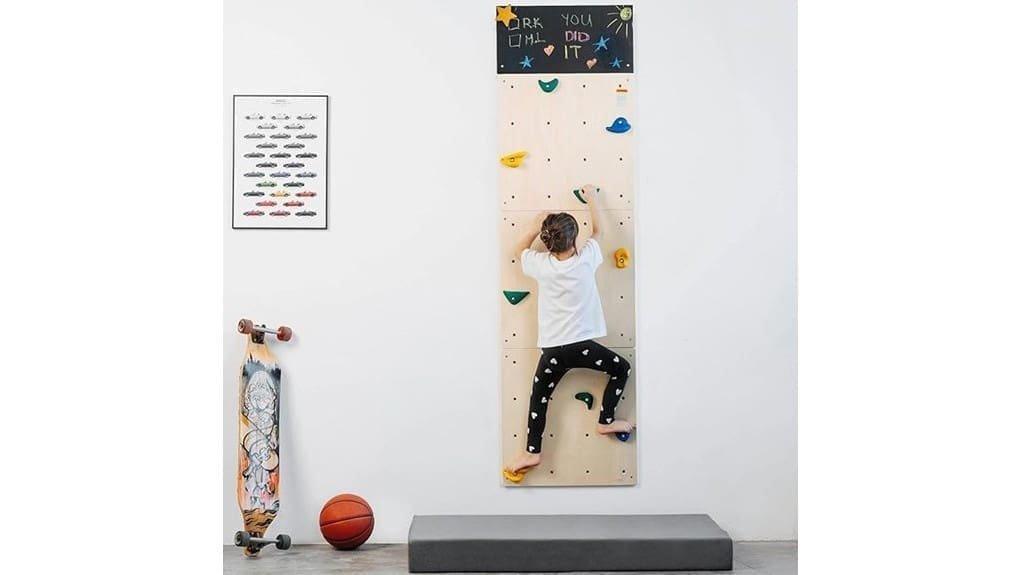

You’ll get three predrilled plywood panels with a blackboard surface, 12 non-slip rearrangeable holds, and all labeled hardware for mounting to 16 studs. It’s made for kids about 3–8 years, supports up to 132 lb, and fits an 82.5 x 23.6-inch footprint but needs clear fall space and stud-compatible walls. Installation takes about 60–90 minutes with two adults using common tools. It’s sturdy and customizable; keep reading for detailed setup, safety, and alternatives.
Some Key Takeaways
- Sturdy three-panel plywood wall mounts to 16 studs, offering durable indoor use for children under the 132 lb limit.
- Includes 12 rearrangeable non-slip holds and labeled hardware for customizable routes and straightforward assembly.
- Recommended for ages 3–8 (36–96 months); best for preschool and early-elementary climbers.
- Typical assembly takes 60–90 minutes with two adults using common tools and provided mounting templates.
- Inspect monthly for wear at connection points, maintain finish, and enforce clear fall zone and supervision for safety.
What the ComfyBumpy Rock Climbing Wall Includes and How It’s Built
Assemble and explore: the ComfyBumpy Rock Climbing Wall comes as three predrilled plywood panels, a mounted blackboard/drawing surface, a set of 12 non-slip, rearrangeable climbing holds, and the necessary hardware so you can mount a durable, indoor play gym on 16 wall studs. You’ll appreciate solid wood texture that resists wear and gives reliable grip zones. Panels fit together precisely; hardware is thorough and labeled. Holds swap easily for route customization, letting you scale difficulty. Measurements and weight limits are clear, and assembly’s straightforward with basic tools. Overall, construction balances sturdiness, safety, and practical flexibility for indoor use. Choose a compatible wood filler to keep the playset surfaces safe and protected over time.
Who This Indoor Climbing Wall Is Best For (Age, Weight, Room Size)
While the ComfyBumpy is designed primarily for preschool- to early-elementary–aged children (manufacturer recommends 36–96 months), it’s best for any kid who can climb confidently and stay within the product’s 132 lb maximum weight limit. You’ll appreciate clear age suitability guidance: ideal for ages roughly 3–8, though taller or heavier kids may outgrow it sooner. Check room footprint before buying—panels measure about 82.5 by 23.6 inches, plus clearance for movement and fall space. If you’ve got a small bedroom or dedicated playroom with stud spacing that fits, this wooden wall suits focused active play and skill development. You can also complement it with backyard play equipment like a standalone trapeze bar to expand kids’ outdoor activity options and create a kid-friendly trapeze haven.
Installation Walkthrough: Mounting, Tools, and Time Needed
Get your studs located and tools ready before you remove pieces from the box—mounting the ComfyBumpy wall is straightforward but precise work, and being prepared saves time and prevents mistakes. Follow the tool checklist: stud finder, drill, sockets, level, pencil, and safety glasses. Use the included mounting templates to mark 16-stud-compatible anchor points on your H 82.5 x W 23.6-inch wall panel, then pre-drill following manufacturer torque specs for the hardware set. Expect a realistic time estimate of 60–90 minutes with two adults: 30 minutes for marking and measuring, 30–60 for mounting and verification. Many homeowners find that using a repair kit and routine inspections keeps outdoor playsets safer and extends their lifespan by addressing wear and tear early, especially when focusing on playset repair.
Real-World Use: Durability, Safety, and How Kids Interact With It
Because the ComfyBumpy is made from sturdy plywood and mounts to 16 studs, you can expect it to hold up well under regular indoor use and the 132 lb max load, provided you follow the torque and mounting specs. You’ll monitor material wear at connection points and around frequently used holds; occasional sanding and touch-up finish will extend life. Kids engage actively—switching routes, using the blackboard for planning—so inspect holds and hardware monthly. Follow supervision guidelines: stay within manufacturer age/weight limits, keep a clear fall zone, and supervise climbs until kids demonstrate safe, controlled movement and route awareness. For outdoor setups, consider using sturdy ladder rungs and weatherproof materials to keep play areas safe and durable.
Value Verdict: Pros, Cons, Alternatives, and Final Buying Recommendation
Having covered durability, safety, and how kids interact with the ComfyBumpy, it’s time to weigh its practical value for your home. You’ll appreciate strengths: solid long term durability, easy assembly, and clear developmental benefits. Pros: sturdy wood panels, rearrangeable holds, included hardware. Cons: limited to ages 3–8, wall-stud compatibility may restrict placement. Do a price comparison with similar wooden climbers and check customer reviews for real-world wear. Consider resale value—wood construction holds appeal if kept in good condition. Alternatives include modular play gyms or foam climbing sets. Recommendation: buy if you want durable, space-efficient indoor climbing. Many homeowners also prioritize playset deck boards that are kid-friendly and long-lasting when planning adjacent outdoor play areas.
Some Questions Answered
Can Adults Use This Wall for Light Exercises?
Yes — you can use it for light adult fitness and some strength training, but cautiously. Its 132 lb max capacity and kid-focused dimensions limit heavy loads and full-range exercises. You’ll get modest upper-body and grip work using the holds and isometric core engagement, but avoid dynamic moves or full bodyweight routines. Check mounting into studs, distribute weight across panels, and treat it as supplementary, not primary, fitness equipment.
Are Replacement Climbing Holds Sold Separately?
Yes — you can get replacement holds separately. You’ll want to check the retailer or manufacturer for compatible replacement holds and hardware kits; they’ll specify sizes and bolt patterns to match the three predrilled plywood panels. If you need more routes or damaged pieces, ordering the proper replacement holds and hardware kits guarantees safe mounting and preserves the wall’s durability. Keep receipts and warranty info when buying extras.
Does the Blackboard Accept Chalk or Only Dry-Erase?
You can use chalk on the blackboard, but it’s designed primarily for dry-erase; chalk compatibility is limited and may leave residue. If you use chalk, you’ll need more surface maintenance—regular wiping and occasional deeper cleaning to remove dust and ghosting. For daily use, dry-erase markers will be cleaner and gentler on the finish. Test a small area first, and keep a damp cloth and gentle cleaner handy for upkeep.
Is Indoor Humidity a Risk for the Wood Panels?
Yes — indoor humidity can pose a risk to the wood panels. You’ll want to control moisture damage and mold growth by keeping humidity below 50%, using a dehumidifier or good ventilation. Inspect joints and finishes regularly for warping or soft spots, avoid placing the climber against exterior walls, and wipe spills promptly. Treating or sealing the plywood and storing holds dry will extend durability and reduce fungal risks.
Can the Wall Be Relocated Between Rooms Easily?
Yes — you can relocate it between rooms fairly easily. The portable panels and included hardware let you perform quick disassembly and reassembly; panels are plywood and manageable for adults. You’ll need basic tools and about two people to avoid damage. Remove climbing holds, unfasten studs, and move panels individually. Keep hardware organized and inspect wall studs in the new room for safe, secure mounting before reinstalling.